
Florida is home to 23 million residents and another 143 million tourists, each flushing 100 gallons of toilet water every day. The daily waste—1,000 tons of it—must go somewhere.

Florida, the lightning capital of the U.S., sees more lightning deaths and injuries than any other state. Safety experts and survivors stress that more can be done to protect residents, tourists and outdoor workers from harm.

Florida, the lightning capital of the U.S., sees more lightning deaths and injuries than any other state. Safety experts and survivors stress that more can be done to protect residents, tourists and outdoor workers from harm.

Mass tourism and foreign investment have begun to raise questions about whether outsiders are loving Costa Rica too much – and whether too many local people have been left behind.

Bonny Matejowsky/WUFT News
Air conditioning has long been a fact of life in Florida, the nation's hottest state. Rising temperatures make it increasingly a matter of life and death

(Via Florida Memory)
As North Florida’s timber industry faces hurricanes and mill closures, some landowners turn to a copper-colored side hustle: pine straw. Are the human and environmental costs worth it?

To commemorate the 60th anniversary of the civil rights movement events of 1963, 11 students – seven from the University of Florida College of Journalism and Communications in Gainesville and four from the Florida Agricultural and Mechanical University School of Journalism & Graphic Communication in Tallahassee – spent their 2023 spring break reporting from across the U.S. Civil Rights Trail.

Chemical fertilizers help feed the world – at increasingly steep costs to people and the planet. University of Florida and University of Missouri student journalists spent 16 weeks reporting the story of fertilizer from the discovery of nitrogen and phosphorous to their manufacture in supersized chemical plants along the Mississippi River to the promise of future solutions to help us rethink food production and chemical waste.
-
 Courtesy: Florida Fish and Wildlife Conservation Commission/Tim DonovanResilient Florida was created to provide funding to help communities prepare for the impacts of more frequent and severe flooding, but not all who are at risk get the help they need.
 -


-
 This Navy veteran helped clean up Antarctica. Now she’s trying to stop the chemical she suspects led to her Parkinson’s disease.
 -
 From environmental exposure to clinical bias, Black Americans face special risks—and a tougher road to treatment for Parkinson’s disease.
 -
 Exposure to toxic chemicals like Agent Orange and TCE, traumatic brain injuries and other hazards of military service put veterans at higher risk of Parkinson’s disease.
 -
 Rachel Carson brought awareness to the harmful effects of pesticides including DDT when she published her book “Silent Spring” in 1962. It took the United States another decade to ban the pesticide.
 -
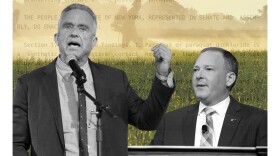 Despite calls for its ban by leading Parkinson’s organizations, the politics of pesticide regulation in the United States make paraquat hard to uproot.
 -
 Toxic embers blew over Dunnellon as thick black smoke blanketed neighborhoods of fearful residents.
 -
 Charred grounds make way for questions of accountability, environmental protections and the future for residents in this burned corner of Florida’s paradise.
 -
 Dunnellon residents raised concerns for months as stockpiled railroad ties sat exposed, yet prevention efforts proved insufficient to stop the fire that many now say was inevitable.
 -
 The Children’s Table distributes millions of meals throughout north central Florida each year. Its 97-year-old co-founder shows no signs of slowing down.
 -
 In the 1980s, the state embarked on a major effort to clean up dairy pollution in South Florida’s waters. Florida bought out dairies, helped modernize those that remained, and strictly limited nutrient runoff. Half a century later, have the problems moved into North Florida’s springs country?


