
-
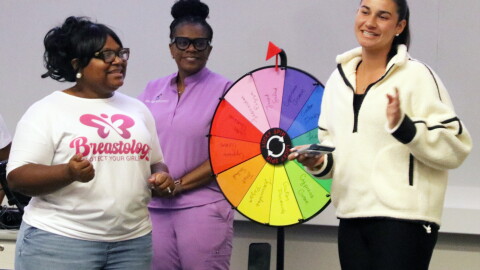 The Gainesville nonprofit Blossoming Butterfly Inc. brought health educators and a cancer survivor to campus on Tuesday to discuss breast health, cancer risk and the importance of knowing one's family history.
 -
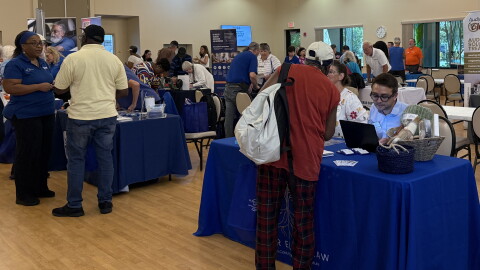 Tess Lippincott/WUFT NewsA 2025 study found that higher senior center attendance was associated with lower levels of loneliness and better mental and physical health in older adults.


-
 University of Florida students are working with the Florida Department of Health in Alachua County to provide free flu vaccinations at 37 Alachua County schools through UF’s Control Flu program.
 -
 The Astraeus Space Institute held a ribbon cutting late last month for the new Mission Operations Center.
 -
 To talk more about the telescope and its launch, Kristin Chermont Spina sat down with Marian Summerall, a producer for Central Florida Public Media.
 -
 These soils were collected in Apollo 11, 12, and 17 missions from NASA who loaned it to Scientists Rob Ferl and Anna-Lisa Paul.
 -
 In a news release, the department said it appears the infection was contracted locally. Here's how to keep yourself — and your family — safe.
 -
 Last year, the state recorded its highest number of child drowning deaths as 120 children lost their lives.
 -
 It would provide funding to help better educate primary care doctors on how to diagnose and treat those who might have diabetes.
 -
 The planet is called LHS 1140-B. It sits in its star’s “habitable zone." That's where the planet orbits at the right distance from its star for water to exist.
 -
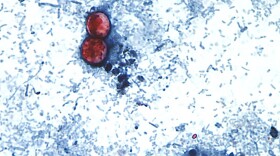 According to the Florida Department of Health, there were 96 total cases reported statewide as of Saturday.
 -
 They're microscopic materials that have been linked to some health defects, and they typically come from household appliances like nonstick cookware.


