
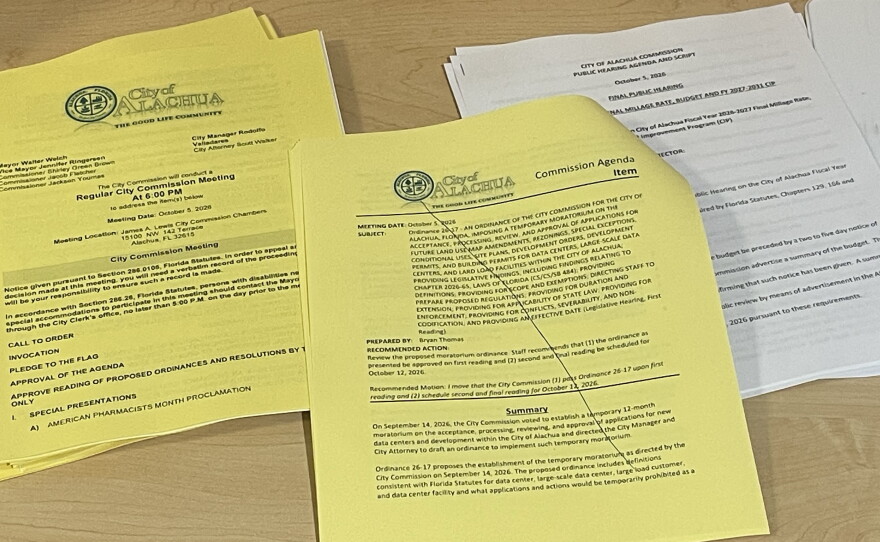
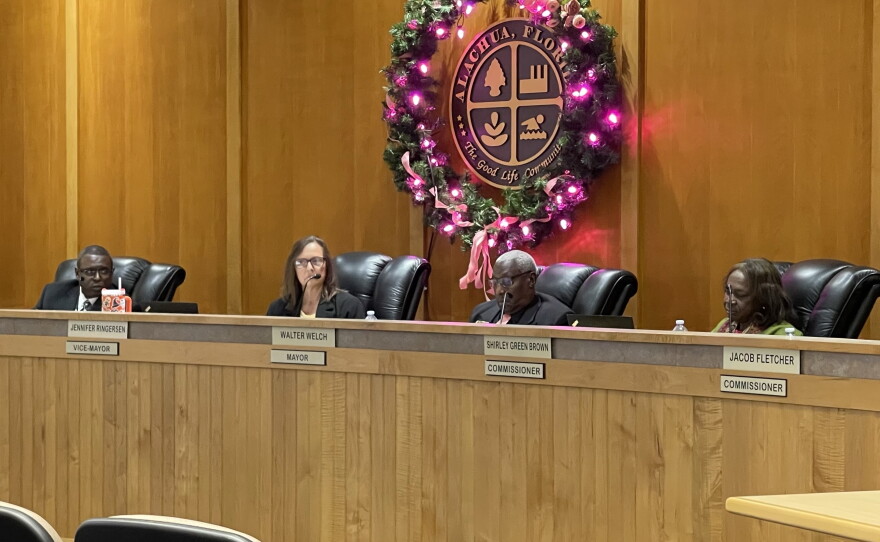
Alachua city commissioners approved the first reading Monday of a 12-month moratorium on the development of artificial intelligence data centers. The near-unanimous vote comes at a time when city and county governments across Florida are facing backlash from communities over large-scale data center construction.
If passed, the moratorium would pause any construction of data centers, including accepting an application for one, said Bryan Thomas, the city’s planning and community development director. He said it also includes a six-month extension provision if the city commission determines it’s necessary.
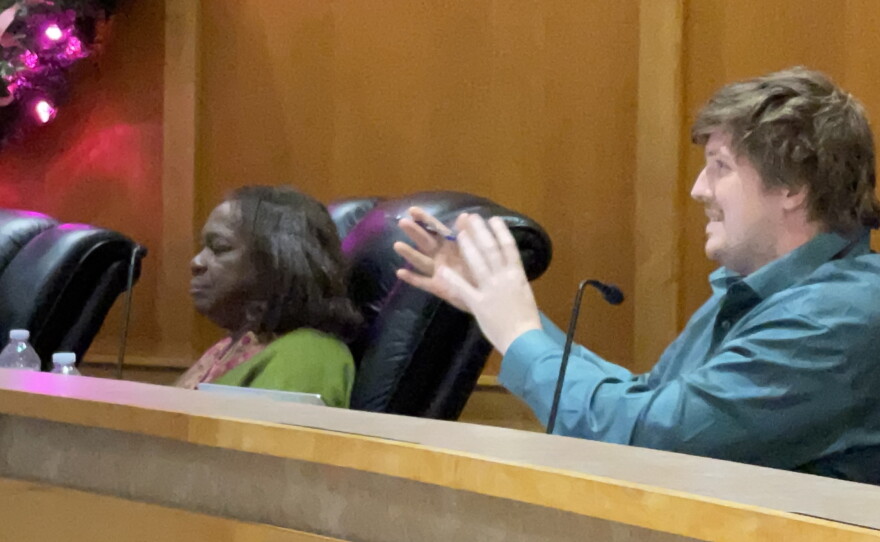
The vote comes after weeks of postponing the topic before city commissioners, after it was first brought up in mid-September and then delayed in a last-minute canceled meeting Sept. 28. Commissioner Jackson Youmas, who was sworn in earlier this year, was the lone no vote on the ordinance.
“I would like to see stronger language in this and also an independent body outside of PMZ (property management zone) to counter this," Youmas said. "So with that being said, I vote no.”
WUFT reached out to Youmas on his personal and office phone numbers for further comment on why he voted no, but received no response.
The next and final step would be for the city commission to consider the ordinance again on Oct. 26. City commissioner Jacob Fletcher said there’s currently no plans or applications for a data center.
By putting a hold on data center construction for 12 months, city commissioners are addressing an issue that’s raised voter concern ahead of the November elections — whether a data center would affect their water quality and utility bills.
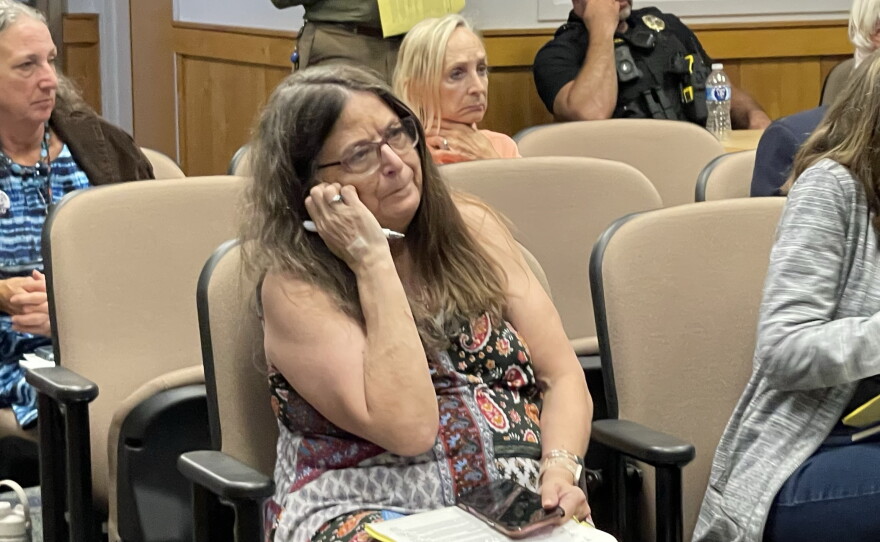
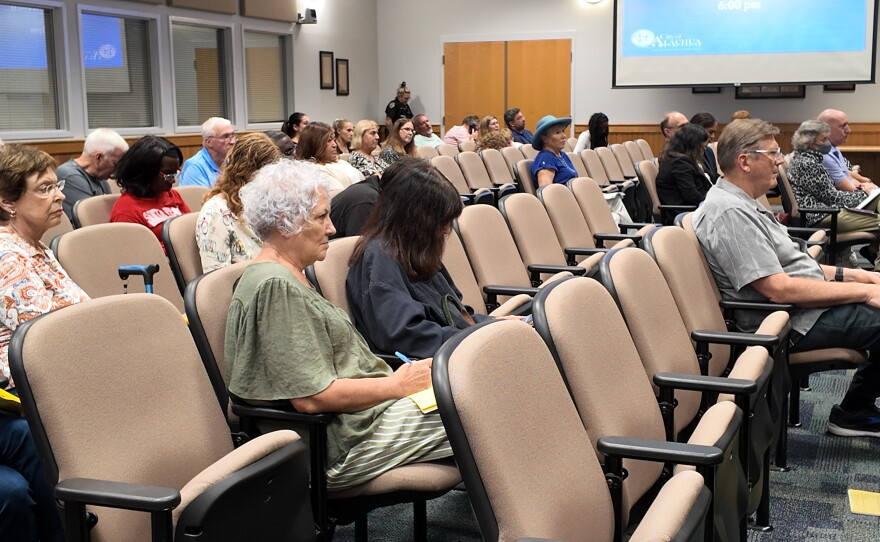
About eight residents spoke during the meeting's public comment period, bringing up concerns that a data center may have on the environment, such as causing noise and light pollution.
That included Haripriya Benedict, an Alachua resident, who voiced her strong opposition to data centers because of the water and electricity they use and how they could take up resources.
“Right now we are in the middle of a drought, so to speak, and there (are) restrictions where our communities are already asking us to not use water,” Benedict said. “It's the last thing we need.”
Lorraine Hjelmeir, who has lived in Alachua for 21 years, said she was concerned there wasn’t enough research on the environmental impact of data centers, especially if one were to be allowed after the moratorium is lifted.
“I think we are rushing it, and it's always at the expense of the citizens,” Hjelmeir said.
The community response is one echoed among residents of other Florida cities and in statewide elections. Florida’s gubernatorial candidates have agreed that the state either needs to completely shut the door on data centers, or make it much tougher for them to be approved.
This position is contrary to the stance taken by President Donald Trump, who has promoted data centers as the key to putting the United States at the forefront of the AI industry. Earlier this year, the president sought for the federal government — rather than state governments — to be AI’s sole regulatory body.
The effort fell short in Florida’s legislative session earlier this year. Lawmakers mandated through SB 484, which was signed into law by Gov. Ron DeSantis on May 7, that data centers must pay for their own utilities. It also required a state office to submit a study to top officials next year about the construction and operation of data centers.
Yet lawmakers’ regulations also made it tougher for consumers to be aware of whether a data center is being constructed near them, since legislators struck out provisions that would have mandated local leaders to disclose to the public whether a data center would be coming to their community.
The second — and final — reading on Alachua’s proposed moratorium is scheduled for Oct. 26.