
Food distribution lines across Gainesville grew longer last month as the government shutdown disrupted SNAP benefits. For many residents, Gainesville Free Food remains a trusted resource for up-to-date information on where to find meals.
What is Gainesville Free Food?
Jess and Christine Larsen have lived in Gainesville for over two decades and founded Gainesville Free Food, a journalism and community collaboration organization that publishes locations of food distribution sites. Their goal is simple: ensure everyone has access to basic nutrition.
“I'm just really happy to be able to make sure that people eat, spreading the information and making sure that as many people as possible know where to get the free food,” Christine Larsen said.
The group also provides logistical support to distribution sites, recruits volunteers to manage growing crowds and connects pantries with additional food sources such as farms and local businesses.
Gainesville Free Food maintains a private Facebook group with 11,000 members where community members can share locations, as well as a public page with 1,200 followers. The organization has been posting more frequently during the past month, including on Instagram.
When did it start?
Gainesville Free Food began during the stay-at-home orders caused by COVID-19.
“A lot of people were worried about where to get food,” Jess Larsen said.
Online information about distribution sites was often outdated, leaving people driving to locations that were no longer operational. At the same time, many residents didn’t know about the places that were actually giving away supplies.
“There was some of the largest amounts of waste that I had ever seen before at the places where there was food to be given away,” he said.
Seeing this gap in information and having relied on free food themselves in the past, Jess and Christine Larsen created Gainesville Free Food to help residents find these events. By increasing turnout, the organization helps distribution sites balance supply and demand, reducing waste and making resources more accessible.
Who is affected by this?
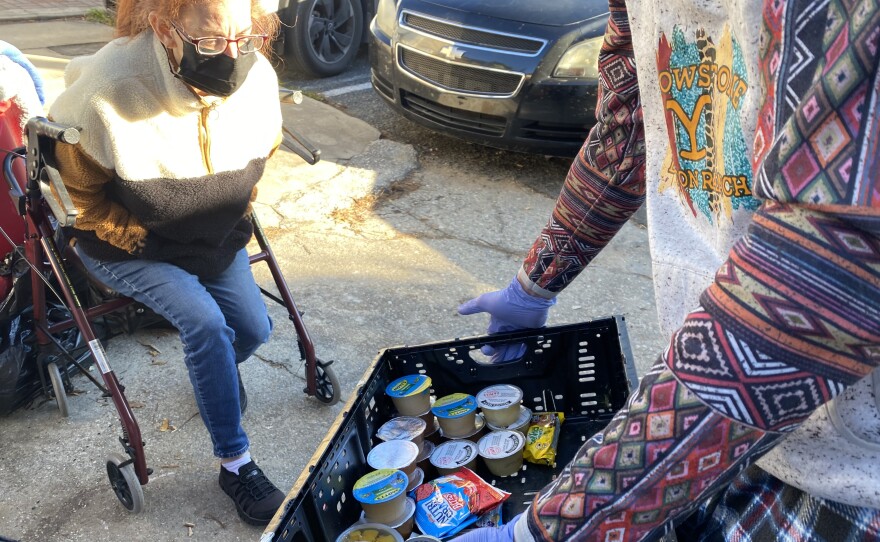
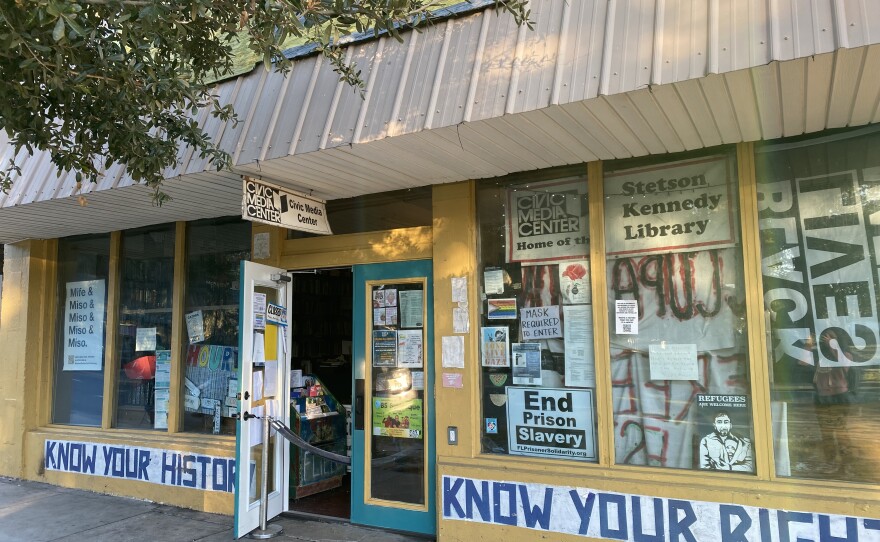
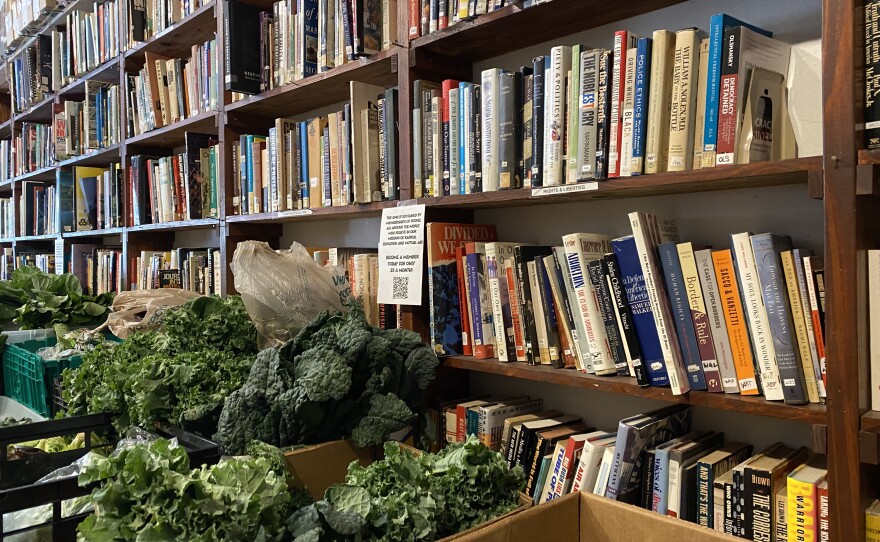
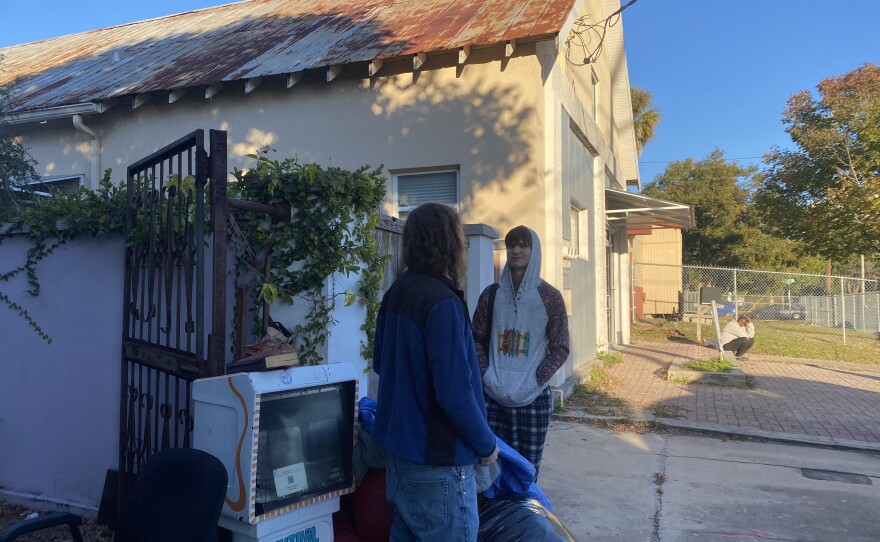
Gainesville Free Grocery Store at the Civic Media Center, 433 S. Main St., is one of the organizations with which Gainesville Free Food collaborates.
Meghan Memos, 55, came to the distribution earlier this month after her SNAP benefits were disrupted during the recent government shutdown. She has relied on SNAP since 2015, when she divorced and began supporting herself on a limited income.
“I’m really grateful that this event exists for people because of everything that’s going on with the government right now,” Memos said. “It’s very fortunate that we have a community of people that come together.”
Memos found the pantry on Facebook through Gainesville Free Food. This was her first visit. She said she wishes she could give back physically, but her cerebral palsy limits her mobility.
“If I didn’t have trouble walking, I would be out there volunteering,” she said. “That’s what I really wanted to do with my life.”
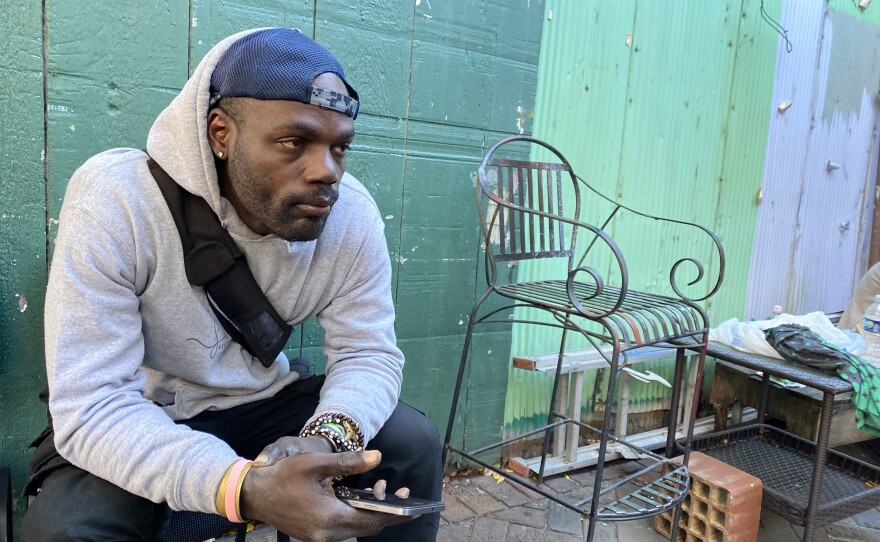
Tristian Williams, 40, is a writer and spoken word poet who came for food but also to lift others’ spirits with his art.
“I always imagine sharing my spoken word to help heal people,” Williams said.
Homeless at the moment, Williams tries to encourage those around him and remind them that everyone needs support.
“We’re all human and we all need help at times in life,” he said. “Never judge a book by its cover.”
Why are food distribution sites important?
Jess Larsen said food insecurity is a challenge that no one deserves to face.
“These are not their end-of-the-road situations. They have somewhere else to go in life,” he said, “and for them to be able to eat food allows them to return to a sense of normalcy that they had once known.”
Access to nutritious food provides more than calories. It gives people greater food choice, which can be “positive and therapeutic,” helping them recover from nutritional deficiencies and regain a sense of stability and well-being.
Beyond the biological benefits, these sites foster community. Jess Larsen has watched people who come for food choose to volunteer, which reinforces their sense of belonging and purpose.
“They really seem to feel like they have an increased dignity experience where they feel like they are allowed to be a part of the community that they have come to rely on,” he said, “and this has been a form of healing that I have observed with my own eyes for many people who have recently faced starvation recovery.”
How can people get involved?
One of the easiest ways is to spread the word and take care of yourself and others.
“Make sure you eat. If you can get there yourself, please do,” Christine Larsen said. “If you can take your neighbor or another family member, please take them to make sure that everybody gets free food.”
Anyone can join the Gainesville Free Food Facebook group or follow the organization on Facebook and Instagram. Donations are welcome through Venmo @gainesvillefreefood or CashApp $gainesvillefreefood.
Another way to help is by volunteering at local food distribution sites.
For example, Sandor Seely, a 16-year-old Gainesville resident, has been volunteering at the Civic Media Center for around two years. He spends two to four hours per week doing anything from organizing food to packing orders.
Seely’s favorite part is the “sense of a team trying to help people.” He especially enjoys packing orders because it’s like grocery shopping for someone while also doing something good.
“We need the help,” he said. “These people need help, probably as much as they can get. If you’re able and have time, I would recommend volunteering.”